eaSEL (Ease Through Art) is a knowledge repository designed for special educators and teachers working with students with disabilities in under-resourced settings. Divided into six modules, it explores different components of Social and Emotional Learning (SEL) through the lens of art. By harnessing the power of creative expression, art-based SEL promotes emotional, cognitive, and social development, offering a unique and effective approach to meet the diverse needs of children with disabilities.
With support from the American India Foundation, two fellows from the 2022–23 Banyan Impact Fellowship cohort, Padma Samhita Vadapalli and Sanaa Munjal, co-created this curriculum to address the persistent challenges of accessibility and awareness in the disability space.
During their fellowship, Samhita, who worked directly with children with disabilities, and Sanaa, who focused on mental health initiatives, observed that SEL was rarely implemented in classrooms—particularly in rural Indian schools, where resources are limited and children often lack essential support for emotional and social development. They were struck by how much children with disabilities could benefit from early interventions rooted in art-based approaches. Believing that knowledge and tools should be freely accessible to all, they sought to foster a culture of inclusion and empower educators to bring SEL into classrooms, no matter the resources available.
This shared vision inspired the creation of eaSEL, an inclusive knowledge repository empowering special educators to integrate SEL-based activities into their classrooms.
Children with disabilities often face challenges in expressing their thoughts, emotions, and experiences, and are at higher risk of mental distress throughout their lives. Traditional therapeutic approaches often fall short in addressing their specific communication and emotional needs, highlighting the importance of alternative interventions that encourage self-expression and holistic development. Despite its potential, art-based SEL remains largely underutilized among PwD communities in India—a gap eaSEL seeks to bridge.
“Accessibility is not a problem to be solved. It’s a culture to be built.”
Sheri Byrne-Haber, Accessibility Archives
Meet the Founders
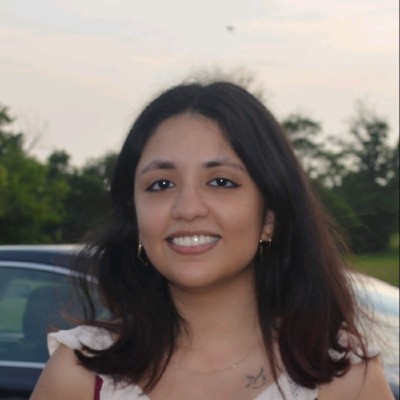
Samhita is a Research Analyst passionate about translating data into meaningful social impact for vulnerable communities. Originally from Hyderabad, India, and with professional experience in the USA, she brings a cross-cultural perspective to her work across nonprofit, public health, and policy focused organizations.
She holds a Master of Business & Science in Biotechnology & Genomics from Rutgers University, New Brunswick. As an American India Foundation (AIF) Banyan Impact Fellow, Samhita was placed with Satya Special School where she worked with children with disabilities in rural India, conducting field research, developing risk assessment tools, and supporting awareness initiatives on disability rights and sexual health. She contributed to the design of M&E initiatives to scale accessible healthcare interventions in under-served geographies. She has also conducted data driven research and evaluated federal programs in healthcare policy and emergency management at the RAND Corporation. She has worked with numerous nonprofit organizations including the Petey Greene Program, Reach Out and Read, and the Disaster Accountability Project.
Her work has contributed to several publications in biotechnology, public health and healthcare policy. In her personal life, Samhita enjoys trying new things, spending time with animals, reading, swimming, and experimenting with baking recipes.

Sanaa served as an American India Foundation (AIF) Banyan Impact Fellow with Tech Mahindra Foundation based in Delhi-NCR. For her fellowship project, she worked on mental health initiatives, supporting the organization in creating a social media strategy and developing a model for their Mind@Ease project to identify and train youth to support their peers professionally and personally.
Hailing from Jaipur, Rajasthan, she moved to New Delhi in 2019 to pursue her undergraduate degree in Economics (Hons.) from Jesus and Mary College, University of Delhi. During the pandemic, she explored diverse domains through volunteering, delving deeper into the development and social impact space. She was selected for prestigious fellowships including the Transform Schools Fellowship, where she developed a curriculum for teachers on menstrual health, and the Millennium Fellowship under MCN and UNAI, where she co-founded Project Raah, aimed at educating students on climate change, consent, and related topics.
Sanaa has held several leadership positions, including serving as President of the Global Association of Economics Education, J&M Chapter, and co-authored a research paper that was added to the virtual library on COVID-19 curated by WHO. Outside of work, she enjoys art journaling, reading, and traveling, which she documents through her travel blog.
 eaSEL
eaSEL 